
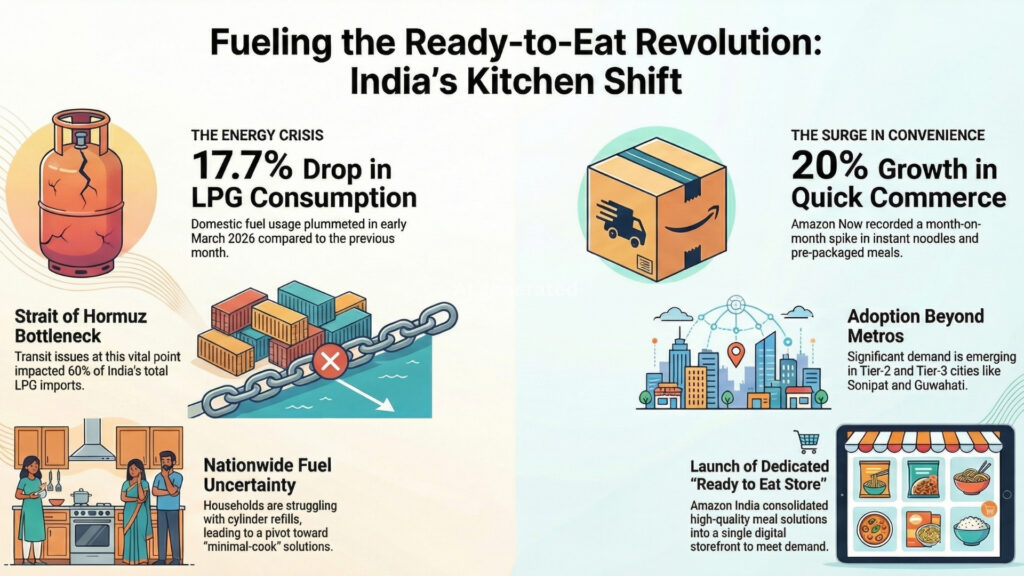
The traditional Indian kitchen is undergoing a rapid, supply-driven transformation. As a persistent LPG shortage continues to disrupt households across the country, consumers are swapping their pressure cookers for "minimal-cook" solutions.New data from Amazon India reveals a significant spike in the Ready-to-Eat (RTE) category, with sales growing by over 15% in recent weeks.
The Logistics of the Crunch
The shift isn't just about a preference for convenience—it’s a necessity born from global supply chain disruptions.
• The Cause: Ongoing transit issues in the Strait of Hormuz have bottlenecked nearly 60% of India’s LPG imports.
• The Impact: India’s LPG consumption plummeted by 17.7% in the first half of March compared to February.
• The Result: With cylinder refills becoming harder to secure, families are turning to instant alternatives to keep the lights on—and the plates full.
Quick Commerce Steals the Show
While the trend is visible across the board, it is most aggressive on Amazon Now, the platform's quick commerce vertical. The service has recorded a 20% month-on-month increase in the sale of instant noodles, pre-packaged meals, and snacks.
Interestingly, this isn't just a "big city" phenomenon. While Delhi-NCR, Mumbai, and Bengaluru remain top markets, Amazon reports high traction in Tier-2 and Tier-3 cities like Guwahati, Panaji, and Sonipat.
A Balanced Shift in Habits
According to Amazon India, shoppers are currently playing a "balancing act." While they continue to stock up on long-term staples like oils and grains, the reliance on instant meal solutions has become a vital bridge during this period of fuel uncertainty.
To meet this demand, the e-commerce giant has even launched a dedicated "Ready to Eat Store" to help consumers find high-quality, pre-packaged options more easily.
What’s Next?
The central government is currently working to prioritize LPG supplies for domestic kitchens and accelerating the rollout of piped gas networks. However, until the supply chain stabilizes, the "instant meal" has officially moved from a luxury convenience to a household essential.